The short version
- South-facing panels are ideal in the UK because they receive the strongest overall sunlight through the day.
- East- or west-facing panels typically generate around 15-20% less than south-facing panels, but can still be very worthwhile.
- North-facing roofs are generally not recommended for solar panels in the UK.
- A pitch of around 30-40 degrees is usually a good angle for domestic solar panels.
A roof that is a little off perfect can still generate useful electricity for many years, especially if it is not heavily shaded and has a sensible pitch.
Which direction is best?
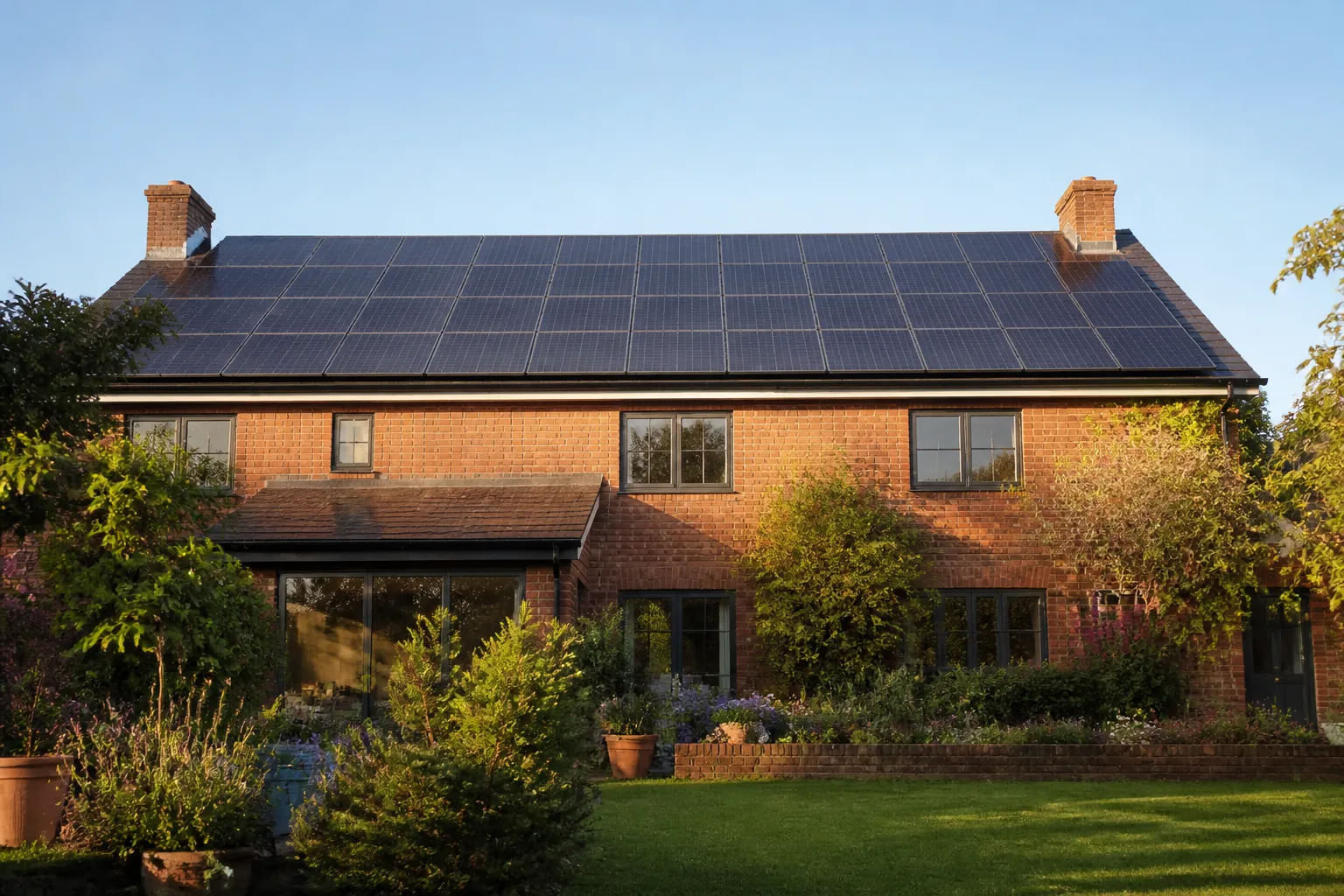
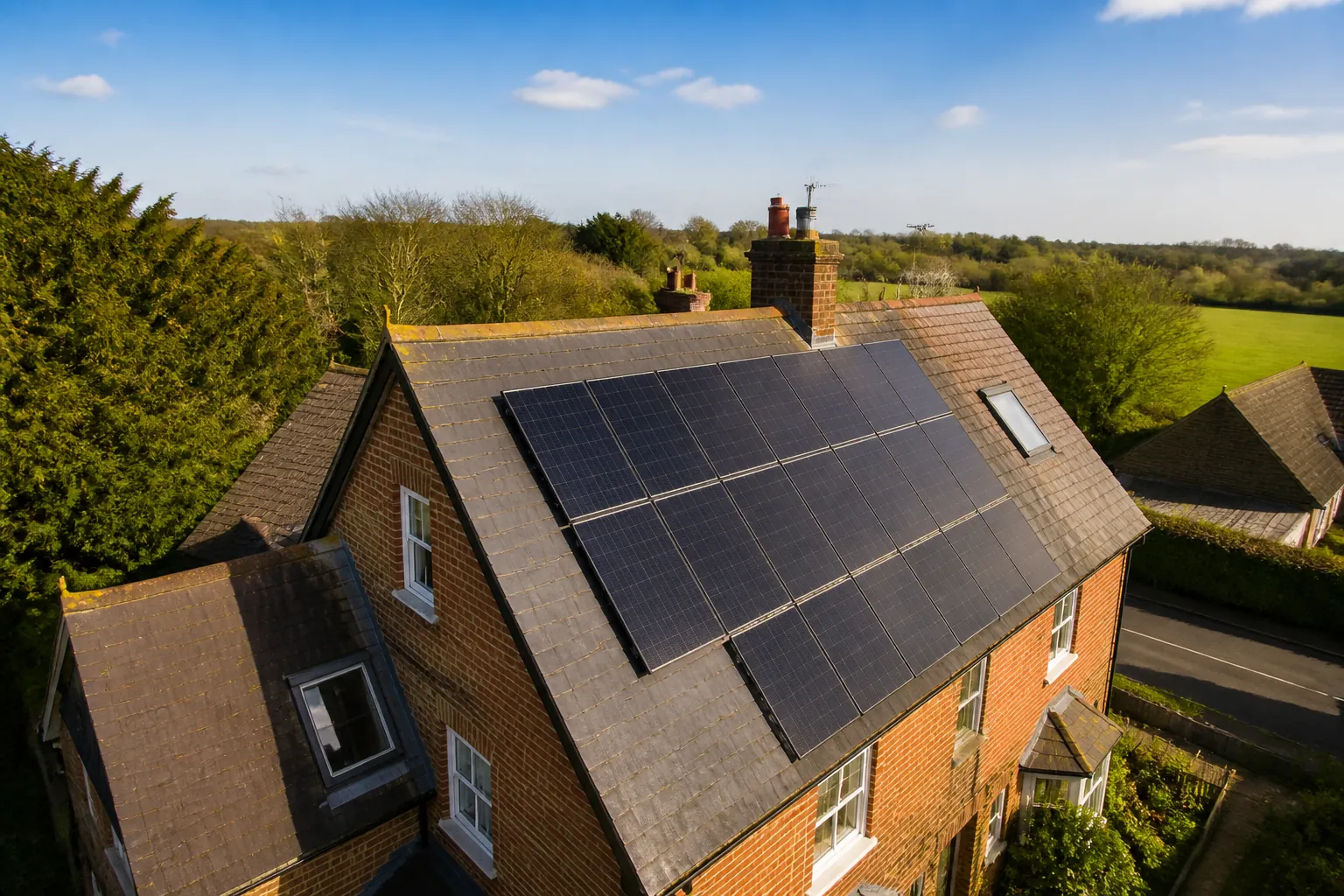
For a UK home, south-facing solar panels are usually the ideal option. They receive sunlight for the longest and strongest part of the day, which helps maximise annual generation.
East- and west-facing roofs are often still good options. They typically produce around 15-20% less electricity than a similar south-facing roof, but east-facing panels can be useful in the morning and west-facing panels can be useful later in the day.
North-facing roofs are not normally recommended for solar in the UK. The output is usually too low to make the most of the equipment and installation cost.
Does roof pitch matter?
Yes, but it is rarely the only deciding factor. In the UK, a roof pitch of around 30-40 degrees is generally considered a good angle for solar panels.
A flatter or steeper roof can still work, but it may generate a little less across the year. The direction of the roof, the amount of shade and how much usable roof space you have often matter just as much.
In practice, many homes do not have the textbook perfect roof. That is fine: a slightly-less-than-perfect roof is usually still very worthwhile if it has decent exposure to the sky.
How much does shading matter?
Shade can make a noticeable difference to solar output. Trees, chimneys, dormers, TV aerials and neighbouring buildings can all reduce the light reaching the panels.
Midday shading is especially important because this is when a south-facing system is often producing strongly. Shade in winter can also be more of a problem because the sun sits lower in the sky.
Optimisers or microinverters can help where some panels are shaded at different times. They can reduce the impact of one shaded panel on the rest of the system, but they cannot create sunlight, so heavy shade is still a warning sign.
How can I check my roof direction?
A simple first check is to use the compass app on your phone. Stand outside where you can see the roof slope clearly, keep away from cars, metal gates and other items that can affect the compass, and check which direction the roof face points.
You can also use a maps app in satellite view. Most maps are north-up by default, so you can look at the ridge of your roof and work out whether the main roof face points south, east, west or north.
This is only a rough check, but it is a useful starting point. A local installer such as AmpWell can confirm the roof orientation, pitch and shading during a free survey and quote.
Common questions
Are east- or west-facing solar panels worth it?
Often, yes. East- or west-facing panels typically produce around 15-20% less than south-facing panels, but they can still generate a useful amount of electricity and may suit homes that use more power in the morning or evening.
Should I put solar panels on a north-facing roof?
In most UK homes, north-facing panels are not recommended. They receive much less direct sunlight, so the return is usually weaker than using a south, east or west-facing roof.
What is the best angle for solar panels in the UK?
A pitch of around 30-40 degrees is generally a good angle for UK solar panels. If your roof is a little flatter or steeper, it may still be suitable, especially if it faces a good direction and has little shade.
Can solar panels work if part of my roof is shaded?
They can, but shade will reduce output, particularly if it falls across the panels during the middle of the day. Optimisers or microinverters can help manage partial shade, but if the roof is heavily shaded for long periods, solar may not be the best choice.